
Guide
How to Read Kakobuy QC Photos Without Inventing What Is Not Visible
A useful QC review is a sequence of observations, not a feeling.
Use this order every time: identity, geometry, measurement, construction, condition, missing evidence.
Identity
Confirm the item before grading it.
Check product type, color, size label, version, quantity and included pieces. If any of those are wrong, document the mismatch first.
Geometry
Look at the widest relevant view.
Ask whether the overall shape, symmetry and proportions make sense.
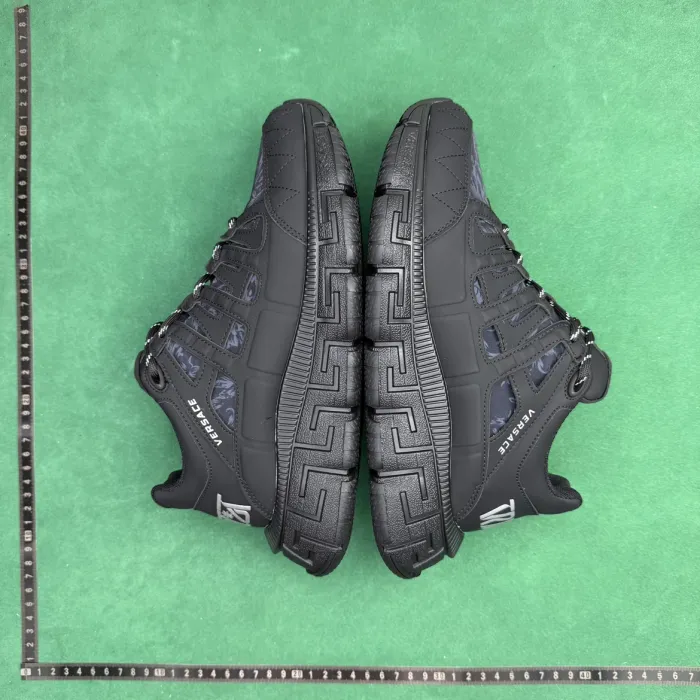
For shoes, compare the pair. For clothing, inspect the shoulder/body relationship. For bags, compare the body and handle placement. For glasses, check frame and temple alignment.
Measurement
Use the ruler to answer a fit/specification question.
Do not collect measurements just because they exist. Decide which number can change your decision.
Examples:
- T-shirt chest width and length;
- hoodie chest / length / sleeve;
- pants waist / rise / inseam;
- shoe insole length when available;
- bag width / height / depth;
- belt usable hole range.
Construction
Zoom only after the geometry is acceptable.
Inspect category-specific features: seams, panels, closures, prints, embroidery, hardware, sole attachment or other visible construction.
A close-up can confirm a visible detail. It cannot prove hidden internal quality.
Condition
Look for visible damage: stains, tears, scratches, dents, missing pieces or broken hardware.
Separate product damage from packaging damage.
Missing Evidence
Finish the review by writing what you still do not know.
A missing answer is not a failed answer.
Examples:
- sleeve length not shown;
- bag interior not visible;
- shoe label unreadable;
- electronic accessory count unclear;
- side profile missing.
Ask for One Specific Extra Photo
A focused request should identify the area and purpose.
Better: “Please measure the left insole heel-to-toe.” Better: “Please photograph the zipper base straight on.” Better: “Please show the bag interior and included strap.”
Weak: “More photos please.”
Lighting and Color
Warehouse lighting, exposure and screen settings can shift color.
Use photos to detect obvious wrong-color situations, but be cautious about judging subtle shade differences between seller photography and warehouse photography. Measurements and geometry are less sensitive to display conditions.
Category-Specific Evidence
Shoes
Pair symmetry, silhouette, toe/heel shape, sole geometry, panel alignment, size label and measurement evidence.
Clothing
Correct variation, flat dimensions, shoulder/body relationship, visible seam/print alignment and condition.
Bags
Dimensions, body symmetry, straps, zippers, hardware, corners and included pieces.
Electronics
Physical condition and included accessories can be visible. Functional performance requires actual testing and should not be inferred from a photo.
What Kakobuy’s Standard Inspection Does Not Replace
Kakobuy’s published Help Center describes standard inspection as focused on visible/common issues and notes limited checks for electronics. That means the photo set should not be interpreted as a laboratory test or durability certificate.
Source: Current Kakobuy warehouse inspection guidance
Use the evidence for the question it can answer.
A QC Note Example
Black / size L confirmed. Chest width approximately matches target. Body length still unclear. Front graphic appears centered. No obvious large-area damage in supplied views. Request one length measurement before deciding.
That note is actionable because it separates confirmed facts from the remaining unknown.
Visible vs Not Visible
| Question | Photos can often help | Photos usually cannot prove |
|---|---|---|
| Is it the ordered color/model? | Yes, for obvious mismatches | subtle shade under different lighting |
| Is the item damaged? | visible stains, tears, dents | hidden/internal damage |
| Does it match the target measurement? | when a clear ruler measurement exists | fit/comfort without comparable reference |
| Is construction aligned? | visible seams, panels, graphics | internal reinforcement |
| Does electronics work? | physical condition/accessories | function unless a real functional test is performed |
| Is material durable? | surface appearance | long-term durability/composition |
Use this distinction when writing notes. “Not visible” should remain unknown.
Photo-Angle Map
Front / back
Good for overall identity, symmetry, graphic placement and large-area condition.
Side
Good for shoe profile, bag depth, jacket structure and hardware relationships.
Top / bottom
Useful for footwear shape, soles, interior openings and some product dimensions.
Detail close-up
Useful only when aimed at a specific seam, label, hardware area, print or defect.
Ruler / scale photo
Useful when the ruler is aligned clearly with the dimension you are comparing.
Separate “Observed” From “Interpreted”
Observed:
The left chest edge measures about 58 cm across in the supplied ruler photo.
Interpreted:
This should fit oversized.
The first is evidence. The second depends on the user's body/reference garment and preference.
Keep both, but do not confuse them.